How to Fix Patchy Grass
Fix the cause before you add seed or sod. Compare each patch with healthy turf nearby: check light, foot traffic, soil firmness, and sprinkler coverage. Once growing conditions are corrected, repair a small bare area with a grass type and planting season suited to your region.
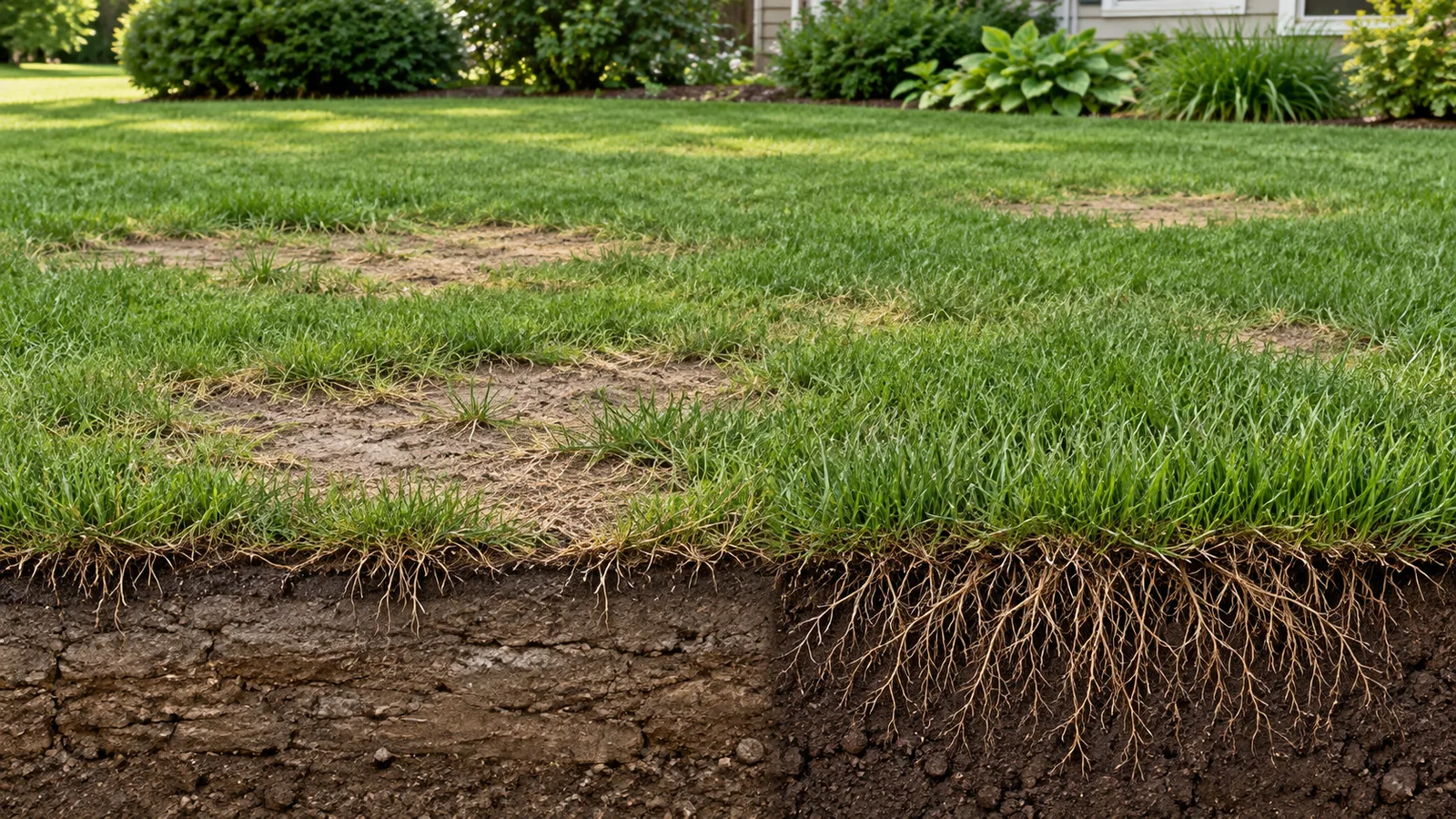
Start with the pattern, not a product
- Along a walking route or play area: repeated traffic may compact soil and wear turf. Redirect traffic before reseeding.
- Under trees or beside a building: count direct-sun hours after leaves are fully out. Grass may not persist in deep shade; consider another groundcover.
- In a sprinkler shadow: place identical shallow containers in thin and healthy areas during a normal cycle. A large difference points to water distribution.
- Across most of the yard: investigate soil, grass suitability, season, and mowing before patching individual spots.
These are clues, not diagnoses. A round brown spot does not prove fungus, grubs, or pet damage. If the area is spreading, use the checks in brown patches in lawns.
Make four quick checks
- Look for living crowns. Part the leaves at the soil surface. Green growth at the base may recover; bare soil or dead crowns need replanting after the cause is fixed.
- Check soil moisture several inches down. Compare the patch with healthy ground after watering and again before the next cycle. Surface color is unreliable.
- Test resistance. After the soil is moist, push a screwdriver or soil probe into both areas. A harder patch suggests compaction or buried debris; it does not diagnose nutrients.
- Check light and use. Watch the spot through a normal day and note pet traffic, mower turns, or play routes.
If several patches share the same soil condition, use a laboratory soil test before adding fertilizer or lime. A soil test guides nutrient and pH decisions; it cannot diagnose a sprinkler gap.
Choose the repair that matches the cause
For a small patch with adequate light and drainage, remove dead debris, loosen the surface for seed-to-soil contact, and use a compatible grass type in its local planting window. Keep new seed consistently moist during germination, then transition toward deeper, less frequent watering as it establishes. Species and climate change the timing.
If compaction is widespread, correct it before overseeding; see signs of compacted lawn soil. If a patch repeatedly fails in deep shade or standing water, another planting may be more appropriate. For extensive failure, compare patching with lawn renovation.
Judge the result
New shoots should establish in the repaired zone and withstand gentle use after the species-specific establishment period. If the same boundary returns, revisit light, water distribution, drainage, and traffic before repeating seed. A failed patch is evidence about that location.