Signs a Mower Blade Is Dull
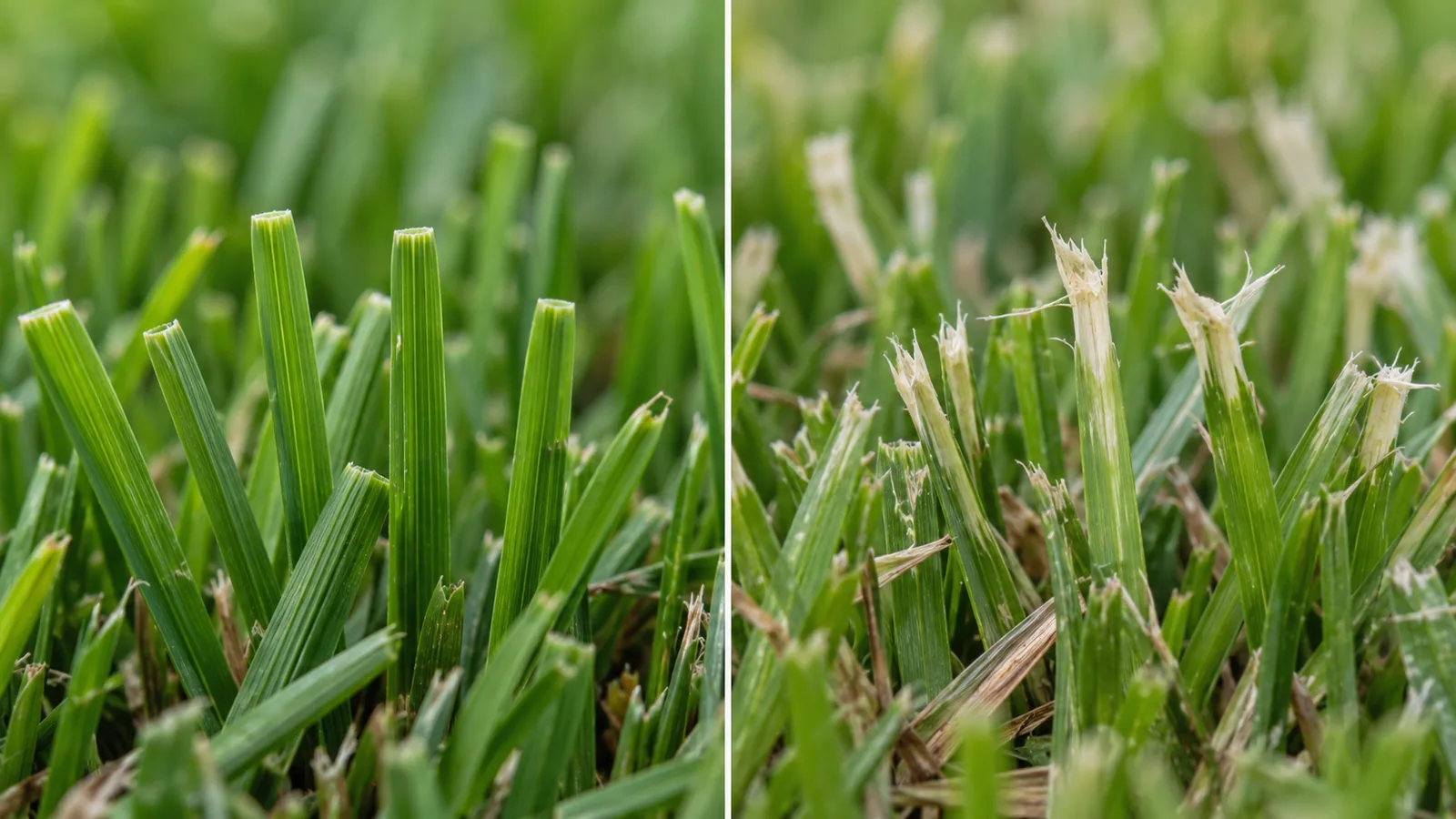
The clearest lawn-side clue is a ragged, shredded edge on many freshly cut grass blades instead of a relatively clean cut. Those torn tips may dry and look pale or brown a day or two later. Check several leaves after mowing, not just the lawn's overall color. Then inspect the stopped mower blade for a rounded, nicked, bent, or damaged cutting edge—following the owner's manual's isolation and handling procedure before touching the machine.
Check the grass first
Walk into a recently mowed section and look closely at several leaf tips at eye level. A sharp blade should leave a comparatively clean edge. Repeated fraying or a fibrous, torn appearance across the mowed area suggests the blade needs attention. A single brown patch is not enough: drought, pests, disease, and fertilizer injury can also brown turf. Use brown-patch checks if only one part of the yard is affected.
Also ask whether the grass was excessively tall or wet when cut, whether the mower was set too low, and whether the deck is clogged. Those conditions can degrade the cut even with a serviceable blade. Review mower height before attributing every problem to sharpness.
Inspect without creating a safety hazard
- Turn the mower off, remove the key if fitted, and wait for every moving part to stop. Prevent accidental starting exactly as the model's manual directs; gasoline, corded electric, and battery-powered mowers require different isolation steps.
- Let hot components cool. Wear sturdy gloves. Support or position the mower only as the manual permits; never reach under an unstable deck.
- Look for a heavily rounded cutting edge, chips, cracks, bends, or damage from striking an object. Do not run a cracked or bent blade.
If you cannot safely isolate the machine, stop and use a mower service shop. After any hard impact, inspect the blade and mower according to the manual even if the grass still appears to cut.
Sharpen, replace, or seek service?
A sound but dull blade may be sharpened and balanced by someone equipped to follow the manufacturer's specification. Replace a blade that is cracked, bent, excessively worn, or outside the manufacturer's service limit. Do not guess at torque or blade orientation when reinstalling. An out-of-balance or improperly installed blade can damage the mower and create a safety risk.
Keep the cut clean longer
Remove stones and debris from the mowing path, avoid mowing when grass is excessively wet, and follow the owner's manual's maintenance interval. How often sharpening is needed depends on use, soil and debris exposure, and blade condition—not a universal number of mowings. Blade sharpness and turf explains the plant-side effects in more detail.