Why Morning Watering Is Usually Best
Early morning is a sensible default for established lawns: it is often cooler and less windy than midday, so sprinklers can deliver water more evenly before afternoon heat. But the best schedule is the one that wets the root zone when the lawn needs it, complies with local restrictions, and does not create runoff. A fixed start time cannot substitute for checking soil and sprinkler performance.
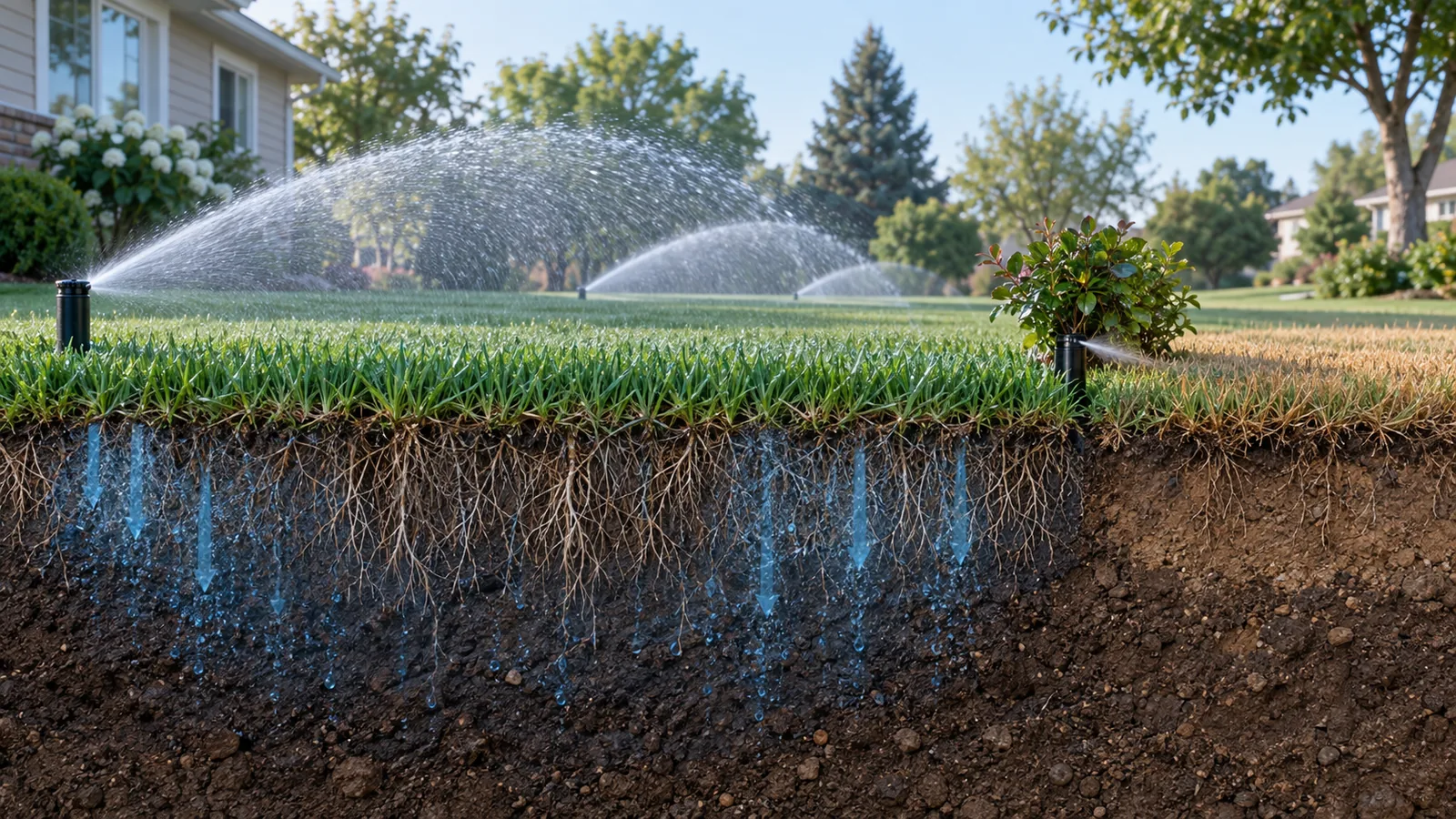
What the time of day changes
Wind can blow spray away from its target, while hot, dry conditions increase evaporation. Morning frequently avoids the strongest afternoon wind and heat. Water on leaves also has time to dry as the day warms. That does not mean one evening irrigation automatically causes disease; leaf wetness, weather, turf conditions, and disease pressure all matter.
If your community permits only certain watering hours, follow those rules. A calm evening may outperform a windy morning in some locations. The goal is effective watering, not obedience to a universal clock setting.
Set a useful schedule in three checks
- Check whether water is needed. Look for persistent footprints or folded leaves and inspect soil below the surface. Rainfall, soil texture, grass species, season, and shade affect how quickly the root zone dries. Do not irrigate solely because a controller says it is Tuesday.
- Measure distribution. Put several matching straight-sided containers across a sprinkler zone, run a normal cycle, and compare collected water. Large differences mean a dry corner and a soaked corner may coexist. Adjust heads or repair coverage before lengthening every zone's run time.
- Check depth and runoff. After irrigation, probe the soil in several places to see whether moisture reached below the surface. If water runs onto pavement or pools before infiltrating, shorten the cycle and allow soak time, then investigate why water runs off.
A shallow wet surface is not proof that roots received enough water. Conversely, continuously soggy soil deprives roots of air. For persistent wetness, review why some lawns never dry out.
Match the schedule to the lawn
An established lawn typically needs a different approach from newly seeded turf, which needs consistent near-surface moisture while germinating. Hotter weather and sandy soils may require more frequent checks; heavy soils may need shorter cycles to prevent runoff. Use local Extension guidance for your grass and climate rather than importing a gallon or minute target from another region.
If the lawn still looks dry
Compare the affected area with healthy turf: sprinkler catch, soil moisture several inches down, shade, slope, and rooting conditions. Brown color alone cannot distinguish drought from disease or other stress. If the pattern persists despite even watering, use the diagnostic approach in what causes brown patches.