What Causes Brown Patches in Lawns?
Brown patches are a symptom, not a diagnosis. Drought, uneven sprinklers, excess water, mower stress, pet urine, disease, insects, and roots struggling in compacted soil can look similar from a distance. Before buying a fungicide or insecticide, compare a brown area with healthy turf: soil moisture, the condition of individual leaves and crowns, root attachment, and whether the boundary follows a sprinkler zone, traffic path, or recurring spot.
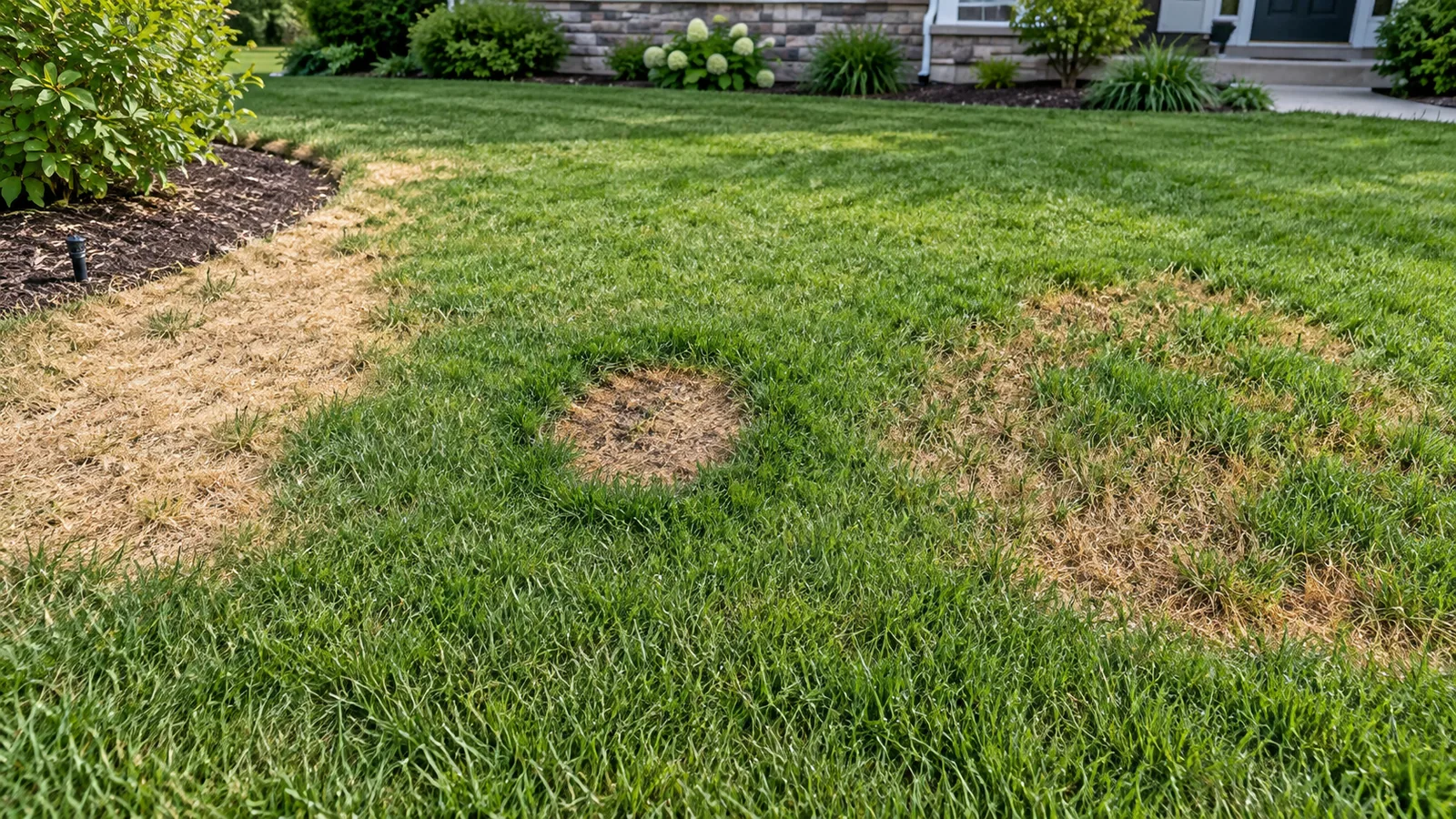
Make observations before treating
- Map the pattern. Mark the patch edge and photograph it from the same position over several days. Does it expand rapidly, recur in one location, or follow a sprinkler shadow or mower track?
- Compare moisture below the surface. Probe a few inches into both affected and healthy soil. Dry soil points toward inadequate water delivery or rooting; persistently wet soil points toward excess irrigation or drainage trouble. A wet surface does not prove deeper roots are hydrated.
- Inspect leaves, crowns, and roots. Part the grass. Are only leaf tips tan, or are the bases dead? Gently tug at the turf; easily detached grass may justify closer inspection for root damage, but is not proof of a particular insect.
- Recall recent events. Note heat, heavy rain, fertilizer or herbicide application, pet use, mowing height, and how quickly symptoms appeared.
Match clues to the next check
- Dry patch inside an irrigated lawn: compare sprinkler catch in the patch and nearby green turf. A nozzle or blocked spray can create a repeatable dry shape. See why some areas stay dry.
- Soft, wet, or persistently saturated patch: reduce unnecessary watering and investigate grade, runoff, and drainage. Do not add more water because grass is brown.
- Small recurring spots where a dog urinates: pet urine is one possibility, sometimes with greener growth at the edge. Location history matters more than the ring alone.
- Frayed or uniformly tan leaf tips after mowing: check cutting height and blade condition. A dull mower blade can tear leaves rather than cut them cleanly.
- Rapidly developing straw-colored or spotted leaves: disease is possible, but several diseases and environmental stresses overlap. Note the grass species, weather, leaf markings, and whether crowns remain alive; send a sample to a local Extension diagnostic service when treatment depends on identification.
A lawn can have more than one issue at once. For example, a sprinkler gap and compacted soil may both make a section drought-prone. Do not infer grubs or “brown patch” fungus from the common-language phrase brown patch.
Act on the supported cause
Correct irrigation distribution, drainage, traffic, or mowing practice when those observations support it. If crowns are alive, allow recovery under suitable growing conditions before reseeding. If turf is dead, fix the limiting condition and then use the patch-repair sequence. For suspected disease or insects, seek a local diagnosis before applying a pesticide; the wrong treatment can waste money and delay the real fix.